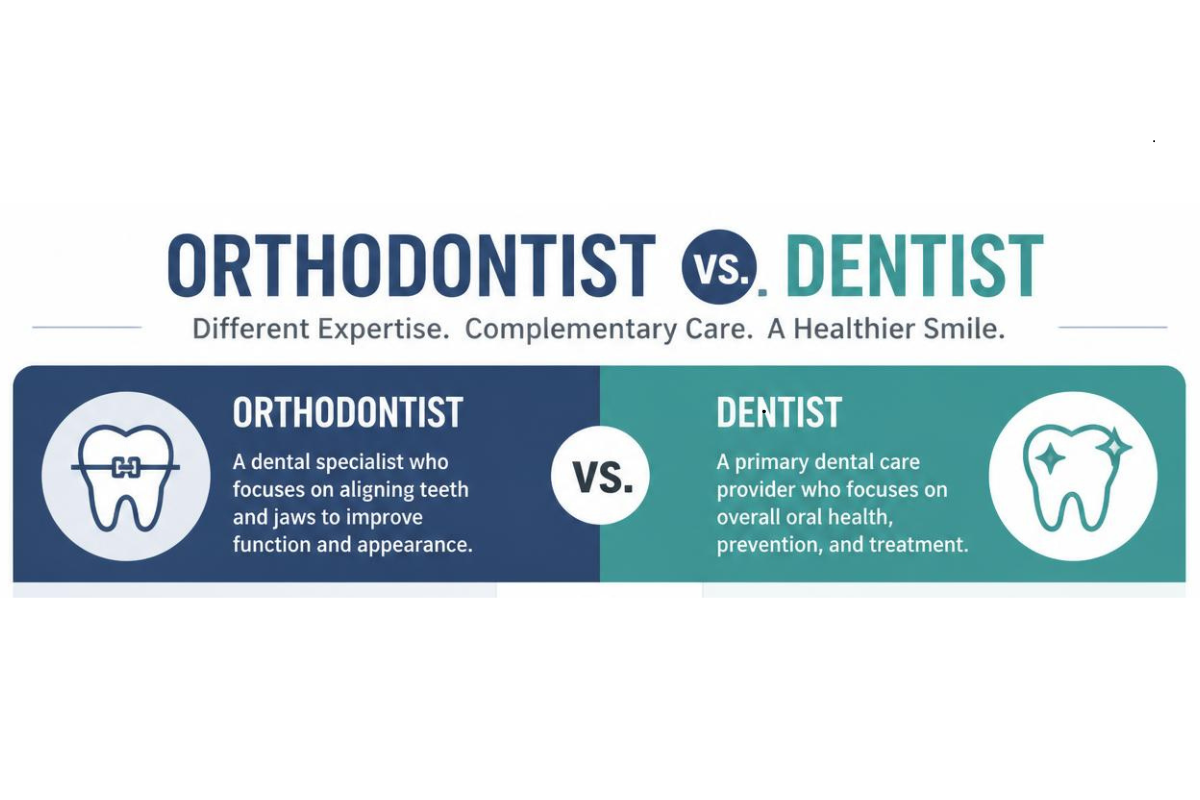
A dentist provides broad oral healthcare, such as cleanings, fillings, gum care, and preventive treatment, whereas an orthodontist focuses specifically on diagnosing and correcting tooth and jaw alignment issues using controlled movement systems. Orthodontic treatment requires an understanding of bone remodeling, bite mechanics, and facial growth patterns. That level of specialization is what separates routine dental care from orthodontic correction that aims for long-term stability. According to the CDC, malocclusion is one of the most common developmental dental conditions in the United States, reinforcing the need for structured alignment care rather than cosmetic-only correction.
Why Teeth Straightening Requires Specialized Orthodontic Care
Teeth straightening is not a cosmetic adjustment alone. It is a biologically guided process that moves teeth through bone, requiring controlled force and careful monitoring. If forces are not correctly calibrated, patients may experience root stress, gum recession, bite instability, or relapse after treatment. These risks are significantly reduced when treatment is planned by an orthodontic specialist. General dentistry focuses on maintaining oral health, while orthodontics focuses on controlled structural movement that must remain stable for years after treatment completion.
How Orthodontists Ensure Safe and Predictable Results
Orthodontic specialists rely on detailed diagnostic tools such as digital scans, bite analysis, and skeletal imaging to understand how teeth and jaws interact. This allows them to design a movement plan that considers tooth roots, bone density, and occlusion balance. The goal is not only straight teeth but also a functional bite that distributes chewing forces evenly. Treatment is adjusted over time based on biological response, ensuring teeth move safely without overstressing surrounding structures. This level of precision is what makes long-term stability more predictable.
Why Local Orthodontic Care Matters for Jesup Families
Orthodontic treatment is a time-based process that requires regular adjustments and monitoring. Having care close to home ensures consistency and prevents delays in treatment progression. In Jesup, many families prefer structured orthodontic care that fits into school schedules, work routines, and long-term follow-ups without travel burden. This makes local access an important part of treatment success. For individuals searching for a trusted orthodontist near Jesup, proximity allows timely adjustments and better continuity of care, which directly impacts alignment stability and comfort.
Why Dentists and Orthodontists Approach Alignment Differently
General dental practitioners can identify alignment issues and provide referrals or limited correction in mild cases. However, orthodontic care providers are trained to manage full skeletal and dental movement systems.
Tooth movement involves pressure regulation, anchorage control, and long-term stability planning. Without specialized orthodontic oversight, treatment outcomes may not remain stable over time.
Orthodontic specialists also evaluate facial balance and jaw positioning, which ensures that alignment improvements support both function and aesthetics.
Key Differences in Treatment Approach
| Treatment Aspect | Dentist | Orthodontist |
| Focus of Care | Preventive care, restorations, and oral health maintenance | Tooth movement, bite correction, and jaw alignment |
| Approach | Treats existing dental conditions | Designs long-term alignment systems |
| Alignment Capability | May handle minor cosmetic alignment cases | Manages complex bite and jaw correction cases |
Why Early Evaluation Improves Orthodontic Outcomes
Early orthodontic evaluation helps identify developing alignment problems before they become severe. Jaw development is still active during adolescence, making timing an important factor in treatment planning. Interceptive orthodontic care can guide growth patterns and reduce the complexity of later treatment. This often leads to more efficient correction and improved long-term stability. Even adults benefit from early assessment because bite issues can progress gradually over time if left untreated.
How Long-Term Alignment Is Maintained After Treatment
Teeth naturally tend to shift after orthodontic treatment unless retention is properly managed. This is due to bone remodeling and soft tissue memory. Orthodontic specialists design retention strategies based on individual movement patterns, ensuring teeth remain stable after active treatment ends. Follow-up visits help monitor small shifts early, preventing relapse and maintaining bite balance over time.
Frequently Asked Questions
1. What is the main difference between a dentist and an orthodontist?
A dentist manages general oral health, while an orthodontist specializes in correcting tooth and jaw alignment. Professionals focus on long-term bite stability and controlled tooth movement.
2. When should I see an orthodontist instead of a dentist?
You should see an orthodontist when you notice crowding, spacing, or bite issues. They provide structured treatment planning for alignment correction beyond general dental care.
3. Is orthodontic treatment permanent?
Orthodontic results can be long-lasting, but retention is essential. Without retainers, teeth may gradually shift due to natural bone and tissue changes.
Can a dentist straighten teeth like an orthodontist?
Dentists may manage mild alignment cases, but complex orthodontic movement requires specialist training. Orthodontists are trained for full bite correction systems.
4. Why is early orthodontic evaluation important?
Early evaluation allows detection of alignment issues during jaw development. This helps reduce treatment complexity and improves long-term stability.
5. Do orthodontists only treat children?
No, orthodontists treat both children and adults. Adult orthodontic care is common and focuses on improving bite function and alignment.
6. How do I know if I need orthodontic treatment?
Signs include crowding, gaps, jaw discomfort, or uneven bite alignment. A professional orthodontic evaluation provides a clear diagnosis and treatment plan.
Take the Next Step Toward a Confident, Balanced Smile
Understanding the difference between these professionals is the first step toward achieving a healthy, well-aligned smile. Every mouth has unique alignment and bite needs that require careful evaluation and precise planning. Thus, if you are dealing with a misaligned bite or other orthodontic problems, make sure you look out for the most trusted orthodontist near Jesup. At Weaver Orthodontics – Jesup, we combine advanced diagnostic tools with expert treatment strategies to ensure teeth move safely, efficiently, and remain stable for years to come. A personalized assessment helps identify potential bite or alignment issues early, creating a clear roadmap for lasting results.
Don’t wait to achieve a smile that functions well and looks its best. Book an appointment today to start your individualized orthodontic journey with Dr. John K. Weaver and our experienced team. Your confident, healthy smile is closer than you think.
**Disclaimer: This content should not be considered medical advice and does not imply a doctor-patient relationship.